
Marijuana Terpenes: Learn Which Ones are Good for You

Posted on October 10th, 2023 to cannabis by mdcompcare
Marijuana comes in many different strains. While each is essentially cannabis, with the distinctive shape of leaf and production of cannabinoids, they differ widely when it comes to the molecular blends that are generated naturally within the stem, leaves, flowers. The way they are cultivated, the soil they grow in, and the specially cultivated genetic lines produce not just a difference in cannabinoid balance, but also a difference in terpenes.
Terpenes are an essential part of what makes each strain unique. A terpene is a molecular structure that is produced naturally by plants. In fact, the terpenes in cannabis are shared by other common plant families such as herbs, flowers, trees, and even fruits. What makes terpenes shape your marijuana experience is the entourage effect, how they interact with cannabinoids, and with the unique way your body metabolizes different molecules.
But which terpenes are best for you? This article will explore what makes a terpene good or bad and how to discover which terpenes work best with your body. You will learn which terpenes provide desirable effects and how to avoid unwanted side effects by knowing your terpenes.
Terpenes: Good, Bad, and Just Different
Edible forms of medical marijuana, such as gummies or infused foods, offer a discreet and easy-to-use method for patients. However, the onset time for edible effects can vary from individual to individual. This is due to factors such as metabolism, food intake, and tolerance levels. On average, it may take around 30 minutes to 2 hours for the effects of edibles to be felt. Once the effects kick in, they tend to last much longer compared to other methods, ranging from 4 to 8 hours or even more, depending on dosage and individual characteristics.
Most terpenes have positive effects, especially when blended with other cannabinoids and terpenes in small doses. Terpenes are present in trace percentages in most cannabis strains, and usually there are three to seven terpenes present in most cannabis strain.
Terpenes often contribute to pain relief, inflammation control, and sedative effects, or can even aid in focus and creativity. But in the wrong concentrations, some terpenes can make you anxious, paranoid, or uncomfortable. Each terpene is different, and you can find each one in other plants, as well. This can also help inform you about which terpenes will work best or worst for your desired cannabis experience.
Myrcene
Myrcene is the single most prominant terpene found in cannabis. It is present in over 65 percent of strains. Myrcene has an earthy smell of wood, soil, and cloves which is evident in high-mercene strains. It usually provides a sedative effect and is associated with Indica strains, but can also be found in many hybrid and Sativa strains as well.
In medical studies, Myrcene has been found to help control inflammation and is used for pain relief. You can also increase myrcene’s entourage effect by eating mangos, which contain a significant amount of natural myrcene as well.
Eucalyptol
You probably recognize Eucalyptol because it’s what makes Eucalyptus trees and their oil so desirable. Eucalyptol has that signature cool, minty smell that is so delightfully aromatic. It is well known for aiding in clearing respiratory paths, which is why eucalyptus is often used for colds and allergies. In cannabis, it has also been found to contribute to pain relief and some studies have found that it aids in treating people with Alzheimer’s.
Terpinolene
Terpinolene is one of those terpenes you should watch out for. It has a lot of positive effects, but some people experience a negative reaction to high amounts. Terpinolene is also found in sage, nutmeg, cumin, and other plants. It has a fresh citrus and pine smell, but unlike other terpenes with this type of smell, it mainly provides a sedative and relaxing effect. It can blend with other cannabinoids and terpenes to increase focus and sometimes causes the user to become more energetic.
Terpinolene has been used to treat insomnia and anxiety, but some people have the opposite reaction. You might experience increased anxiety with cannabis strains that include terpinolene instead of relaxation. Especially if you are prone to cannabis-related anxiety or paranoia.
Guaiol
The other terpene to be cautious about is Guaiol. This terpene smells like wood and fruit, commonly found in coniferous (evergreen) trees. Unlike other terpenes that have an oil base, guaiol has an usual liquid structure. It can contribute to pain relief and inflammation control. It has also been found to reduce free radicals in the body and can slow the growth of cancer cells.
However, Guaiol is another terpene that can cause anxiety for those who experience the negative response.
Linalool
Linalool is one of the most popular terpenes. It has a spicy floral aroma and is found naturally in lavender and mint, as well as some strains of cannabis. Linalool is found most prominently in Indica strains and indica-heavy hybrids. It has a strong sedative effect that most find to be extremely relaxing. This terpene has been found to help reduce the symptoms of arthritis, depression, and seizures. Its relaxing nature has been used to counteract insomnia, and it is favored as a soothing factor for those with cancer, as well.
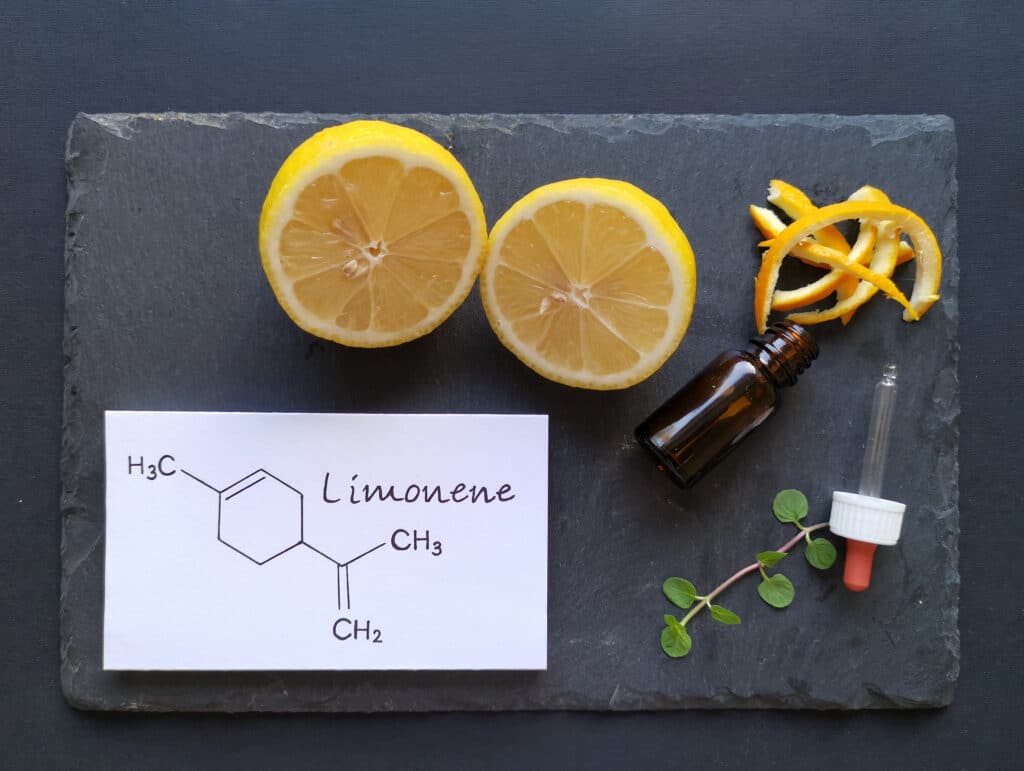
Limonene
Of course, not all cannabis terpenes are sedatives. Sativa strains often have a different blend of terpenes, starting with Limonene. As you might suspect, limonene has a strong citrus smell and is naturally found in most citrus fruits. Limonene has more than an energetic aroma, it also has energetic effects. If you favor energetic and creative sativas, you will likely enjoy strains that include limonene, which is known to improve mood and reduce stress.
Pinene
Limonene’s sister-terpene is pinene. This terpene also has a sharp, fresh smell that reminds you of pine needles. However, it is more commonly found in rosemary, basil, parsley, and orange peels. Pinene is an energetic terpene found in Sativa strains that promotes creativity and focus, while it also provides an entourage effect of inflammation control, reduces memory loss, and can improve your respiration, much like eucalyptol.
Caryophyllene
Caryophyllene is a slightly rarer terpene found in Sativa strains. It is an energetic terpene with a spicy, peppery smell. Unsurprisingly, Caryophyllene is found in black pepper, cinnamon, cloves, basil, and rosemary. It can make you feel wakeful and alert, making more daytime cannabis strains when included in the terpene blend. Medically, caryophyllene can provide anti-inflammatory, analgesic, and anti-anxiety properties. It is also the only terpene that binds directly to your cannabinoid receptors. All others bind to other receptors in your body and nervous system.
Humulene
Hymulene is a unique terpene that does not have a distinct mood effect. It has a woody and spicy scent and can also be found in hops. Rather than affecting your mood or energy, humulene acts as an appetite suppressant. This can be useful if you want the positive effects of cannabis but are looking for a strain that does not cause the munchies. Like many other beneficial terpenes, humulene also contributes to inflammation control, pain releif, and is slightly antibacterial.
How to Discover Which Terpenes are Good (or Bad) for You
We’ve explored many of the most common terpenes found in cannabis strains and the effects they can have. Of course, everyone’s metabolism is unique, and your response will vary compared to your friends and other cannabis users. You may enjoy certain terpene blends and have a negative reaction to others. The best way to find out is to keep track of the terpenes in strains you do or do not enjoy.
Here’s how to discover which terpenes are good, or bad, for you.
List Your Favorite and Least Favorite Cannabis Strains
First, list all the cannabis strains that you particularly like. Highlight strains that you always look for and that you remember a particularly good experience with. Make a separate list for strains that you’ve had a bad experience with.
Identify Terpene Blends that You Like and Dislike
From these lists, research the terpene blends in each strain. Expand your list so you can see all your favored terpene blends on one side, and the terpenes in your disliked strains on the other. You may notice some overlap, but remember that terpenes can cause different effects when combined in different ways.
Note Trends in Your Response to Terpenes
You may notice that you get anxiety with strains that contain a particular terpene, or that you always fall asleep too fast or overeat with other terpene blends. This can tell you that certain terpenes or blends are not ideal for your metabolism.
At the same time, you will probably also identify terpene blends that provide your favorite types of high or medical benefits. You may enjoy a smooth, relaxing Indica high with the right terpene blend, or an energetic and creative session with a different blend.
Test Herbs and Ingredients that Contain Similar Terpenes
You can also explore your response to terpenes by trying out herbs, fruits, and aromatherapy that includes the terpenes you like or dislike. You may have a natural dislike for ingredients that have your least favorite terpenes, or discover a new favorite spice with herbs that include your favorite terpenes. This can reveal a natural affinity or conflict in your body with certain terpenes.
Experiment With Strains that Align With Your Terpene Preferences
Lastly, use what you’ve learned to pick new cannabis strains that have your favorite terpenes and avoid your disfavored terpene blends. In this way, you can more accurately select strains that provide your ideal experience and begin intentionally avoiding any negative side effects.
Discover Beneficial Cannabis and Terpenes for Yourself
The medical marijuana doctors at Compassionate Care Consultants are here to help you find the best cannabis experience for your medical needs. A big part of that is finding strains with terpene blends that help you while avoiding strains that do not provide what you need. Contact us today to learn more about medical marijuana and how getting your medical marijuana card can transform your daily experience for the better.
Need Help Obtaining Your MS Medical Marijuanas Card?
If you haven’t yet obtained your MS medical marijuanas card, be sure to take a look at Compassionate Care Consultant’s full guide on how to get a medical marijuanas card in Mississippi. Ready to schedule a consultation and take the next steps to become a registered patient? Reach out to schedule an appointment.




Copyright © 2024 Medical Marijuana Doctor - MMJ Doctor Near Me
Site by CannaPlanners